1. The Monitoring Gap Is Much Bigger Than Many People Believe.
The greenhouse gases that are produced globally can be monitored through a series of ground stations, periodic aerial campaigns, and satellites operating for hundreds of kilometres from the earth's surface. Each has its limitations. Ground stations are scarce and are geographically biased towards wealthy countries. Aircraft operations are costly with a short duration and are limited in coverage. Satellites are able to reach the entire globe, but are not able to attain the spatial accuracy required to pinpoint the exact emission sources, such as leaky pipelines, a landfill venting methane, an industrial facility that does not report its output. The result is an oversight system that has major inconsistencies at the size where accountability and intervention are the most crucial. Stratospheric platforms are being increasingly looked at as the missing middle layer.
2. Altitude is the best way to keep track of your surroundings Satellites Don't Have the Ability to Replicate
There's a geometry argument for what 20 kilometers is more effective than 500 kilometres to monitor emissions. An instrument operating at a stratospheric altitude is able to see a ground footprint of several hundred kilometers and yet be close enough to recognize emission sources with meaningful resolution -- each facility roadway corridors, agriculture zones. Satellites looking at the same area from low Earth orbit can cover it more quickly but with less precision, and the times to revisit mean that a methane-rich plume that appears, then fades away in a matter of hours won't be captured. A station that has its location in a specific area for a period of days or weeks at a time, transforms intermittent snapshots into continuous surveillance.
3. Methane is the main target for good reason
Carbon dioxide draws the bulk of the attention from the public however methane is the greenhouse chemical where improving monitoring in the near future could make the biggest practical difference. Methane is much more potent than CO2 over the 20-year duration, and a substantial portion of methane emitted by humans comes from single sources- infrastructure for gas and oil or waste facilities, agriculture, and other activities that can be detected and often fixable in the event of identifying. Real-time monitoring of methane from the stratospheric layer that is persistent means that operators, regulators, as well as governments can discover leaks as they happen rather than discovering them months later through annual inventory reconciliations that typically rely on estimates instead of measurements.
4. The Airship Design of Sceye is suited to the Monitoring Mission
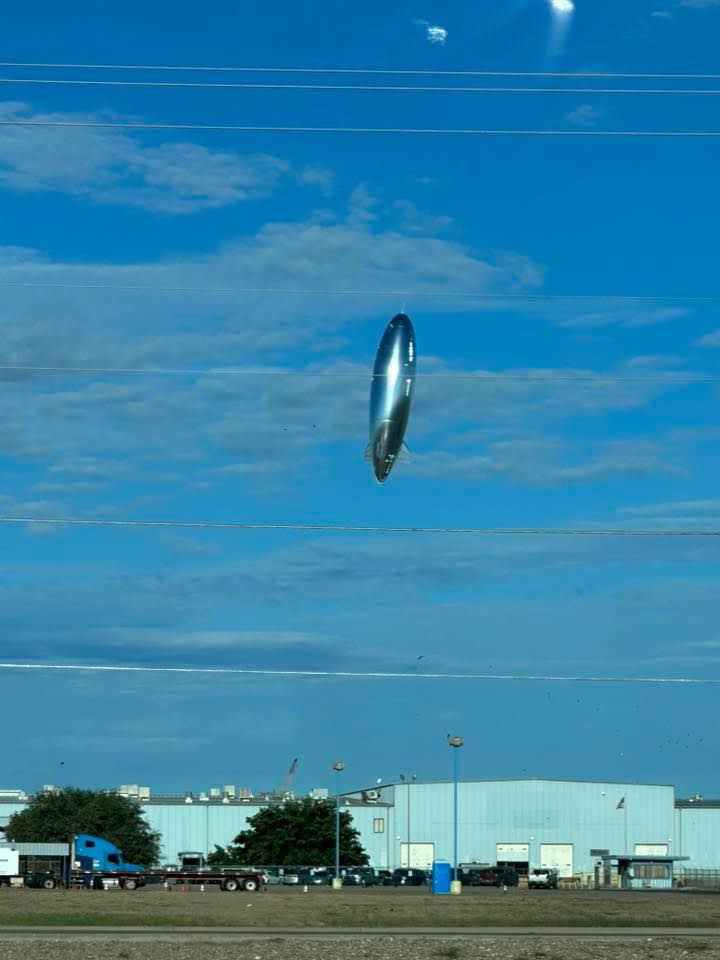
The elements that make up an excellent telecommunications device and an effective environmental monitoring platform overlap more than you might believe. Both require endurance for a long time in stable positioning and sufficient payload capacity. Sceye's lighter than air airship model covers all three. Since buoyancy is able to perform the core task of maintaining altitude and sustaining the aircraft's energy consumption, the budget doesn't get sucked up by lifting It's used for propulsion, station keeping and powering whatever sensors requirements the mission calls for. For monitoring of greenhouse gases in particular that means carrying cameras, spectrometers as well as data processing hardware that doesn't have the extreme weight constraints for fixed-wing HAPS models.
5. Station Keeping is a Non-Negotiable Activity for Useful Environmental Data
A monitoring platform that has a tendency to drift is a monitoring device that can generate data that's hard to comprehend. Being aware of where a sensor was at the time of recording a reading is critical to attribution of this reading to the source. Sceye's emphasis on station keeping -- which is holding an unmoved position over a zone of interest by using active propulsion and active propulsion -- isn't merely being a performance measure for technical reasons. It's what makes the results scientifically defensible. Stratospheric Earth observation only becomes beneficial for regulatory or legal applications when the locational record is robust enough to stand up to scrutiny. Drifting balloon platforms are however advanced their sensors may be, are unable to give that.
6. The Same Platform Can Monitor the effects of oil pollution and Wildfire Risk at the Same Time
One of the most intriguing aspects of the multi-payload model is how the different environmental monitoring missions can complement one another on the very same car. Airships operating on coastlines or offshore areas can carry sensors that have been calibrated for pollutant detection in conjunction with those monitoring methane and CO2. Over land, the same platform architecture allows for wildfire detection technology, which identifies heat signatures, smoke plumes and stress indicators for vegetation that indicate ignition triggers. Sceye's approach to mission design makes these not distinct projects that require separate aircrafts, but as parallel use cases for infrastructure that's already in place and operational.
7. The ability to detect Climate Disasters during real time changes the Response Equation
There's a significant difference between knowing a wildfire started 6 hours ago versus finding out it started 20 minutes from now. Similar to industrial accidents that release polluting gases, flooding events risking infrastructure, or unexpected methane releases from the permafrost. The ability to detect climate disasters at a moment's time with a reliable stratospheric platform gives emergency managers governments, agencies, and industrial operators a window to intervene that simply doesn't exist when monitoring relies on repeat cycles of satellites or ground-based reports. This window grows when you consider that the earliest stages for most environmental emergencies are crucial to intervene in when intervention is the most effective.
8. This Energy Architecture Makes Long Endurance Monitoring Viable
Environmental monitoring mission only achieve their full value if the platform is on site until it has accumulated an important data record. A week of methane readings in an oil field will tell you something. Months of continuous data tells the user something that can be implemented. The ability to sustain that endurance is dependent on solving the problem of energy consumption in the evening -it is the responsibility of the platform to store enough power during periods of daylight to support all systems during the night without losing position or sensor operations. Innovations in lithium sulfur battery chemistry which have energy densities of approximately 425 Wh/kg. This, along with an improvement in solar cell efficiency is what makes a truly closed power loop practicable. The absence of either is simply an aspiration, rather than a definition.
9. Mikkel Vestergaard's Background Explains the emphasis on the environment
It's important understand why space-based company like Sceye puts such apparent emphasis on greenhouse-gas monitoring and disaster detection, rather then focusing exclusively on connectivity revenue. Mikkel Vestergaard's record of applying technology for large-scale environmental and human rights issues provides Sceye the foundational stance that will determine which mission the company focuses on and how it portrays its platform's goals. The capabilities for monitoring the environment aren't a side-payload added onto a telecoms vehicle look more socially responsible. They express a real belief that the stratospheric system should be doing climate work, and that the same platform will achieve both without compromising the other.
10. Data Pipeline Data Pipeline Is as Important as the Sensor
Collecting greenhouse gas readings from the stratosphere's atmosphere is only one part of the problem. Getting that data out to people who need it with a form that they could use, in something like real-time is the second half. A stratospheric technology with onboard processing capabilities and direct downlink to ground stations could reduce the gap between detection and conclusion significantly as compared to systems which batch data for later analysis. For natural resource management applications or monitoring compliance with regulatory requirements or emergency response, the timing of the data is often more than its accuracy. Building that data pipeline into the platform's design from the beginning, rather than treating it as an afterthought is one of the things that makes stratospheric earth observation serious from experimental sensor campaigns. Read the recommended what is a haps for website tips including Closed power loop, softbank investment sceye, sceye haps airship payload capacity, sceye haps project, sceye haps status 2025 2026, sceye haps softbank, Sceye Inc, Sceye stratospheric platforms, sceye careers, Sceye stratospheric platforms and more.

SoftBank'S Haps Pre-Commercial Services What's Coming In 2026?
1. Pre-Commercials are a particular and significant Milestone
The use of terms is crucial in this. Pre-commercial services comprise a distinct phase in the development of any brand new communications infrastructure -- going beyond the experimental demonstration, beyond proof of-concept flight campaigns and moving into territory where real users receive real service under conditions that approximate what a fully commercial deployment will look like. This implies that the platform has been capable of station-keeping with reliability, the signal is in compliance with quality requirements that the actual applications rely on, the ground infrastructure has been interfacing with the stratospheric telecom antenna effectively, and the necessary regulatory authorizations are in place to operate over populated areas. Being pre-commercial is not a marketing milestone. It's an operational goal, being that SoftBank has committed publicly to reaching this goal in Japan in 2026, sets an example that engineers both sides of the partnership need the ability to clear.
2. Japan is the best place to Begin This Challenge
Picking Japan as the ideal location for Pre-commercial stratospheric space isn't made up of a. Japan is a country that has a combination of features that make it close to ideal for the first deployment setting. Its terrain -- mountainous terrain and inhabited islands with thousands as well as long and complicated coastlines -- presents real problems with coverage that stratospheric infrastructure is designed for. Its regulatory environment is sophisticated enough to handle the spectrum and airspace challenges the stratospheric operation raises. The existing mobile network infrastructure that is managed by SoftBank and SoftBank, is the connectivity layer that the HAPS platform must connect to. Additionally, its inhabitants are able to access the ecosystem of devices and technological literacy required to use a variety of broadband without having to wait for an extended period of adoption that can delay significant uptake.
3. Expect Initial Coverage to Focus on areas that are underserved and Strategically Important Areas
The pre-commercial deployments will not take over the entire country. More likely, it's an individualized rollout that targets areas in which the gap between current coverage and what stratospheric connectivity can bring is the largest as well as where the importance of prioritizing coverage is strongest. For Japan, this means that island communities are depend on expensive and restricted broadband satellites, mountainsides rural regions with terrestrial network economies that have failed to provide adequate infrastructure, as well as coastal areas where disaster resilience is a national goal due to the risk of typhoon and seismic exposure in Japan. These zones offer both an unambiguous demonstration of stratospheric connectivity's importance and provide the most useful operational data for refining the coverage, capacity, and managing platforms before rolling out to more people.
4. The HIBS Standard Is What Makes Device Compatibility Possible
One of the things that people might ask about broadband at the stratospheric level asks if the service requires special receivers or operates with standard devices. A framework called the HIBS framework -- High-Altitude IMT Base Station -It is a standard-based solution to that question. By adhering to IMT standards which are the foundation of 5G and 4G networks throughout the world, it is a stratospheric technology that operates as a High-Altitude IMT Base Station is compatible with the smartphone and device ecosystem that exists within the area of coverage. For SoftBank's services that are pre-commercial, this means customers who live in areas of coverage should be able use stratospheric connectivity on their existing devices without additional hardware, which is a crucial necessity for any service that hopes to reach the masses of remote areas, who require other connectivity options and are the least likely to purchase specialist equipment.
5. Beamforming Will Determine How Well Capacity is Distributed
A stratospheric network that covers a large area does not automatically deliver uniform useful capacity across that area. The way in which spectrum and signal power is allocated over the entire coverage area is dependent on beamforming capability which is the capability of the platform of directing signal regions where demand and customers are concentrated instead of broadcasting equally across large areas of uninhabited. To demonstrate SoftBank's preliminary commercial phase, showing that beamforming using an antenna that is stratospheric can supply commercially sufficient capacity cities with vast coverage area will be vital as is demonstrating the coverage area. Broad coverage area with a tiny, unusable capacity will prove little. Specific delivery of genuine usable broadband to specific service areas proves the commercial model.
6. 5G Backhaul Services Could Precede Direct-to-Device Services
In certain scenarios of deployment, the earliest and easiest to validate application of stratospheric connectivity isn't direct consumer broadband, but 5G backhaul, which connects existing ground infrastructure in regions with limited terrestrial backhaul or non-existent. A remote community may be equipped with some ground-level network equipment but may not have the high-capacity connection to the wider network that can be useful. A stratospheric-based platform with that backhaul link expands 5G coverage to communities that are serviced by ground equipment that is already in place without the requirement for end users to engage directly with the system. This kind of scenario is easier to prove technologically valid, gives clearly quantifiable benefits, and increases operational confidence in system performance before the more complex direct to device service layer is included.
7. "Edge of Sceye's Platform in 2025" sets the stage for what's possible in 2026.
Pre-commercial service targets for 2026 is entirely dependent on the level of performance the Sceye HAPS airship achieves operationally in 2025. Testing of station keeping, the performance of payloads in real conditions of stratospheric temperatures, efficiency of the energy system throughout multiple diurnal cycles, and the integration tests required to verify that the platform functions correctly to SoftBank's system of network design all require sufficient maturity before the commercialization process can start. Updates on Sceye Airship Status for HAPS through 2025, therefore, aren't just news items -- they represent the most significant indicators of whether the 2026 deadline is within the timeframe or creating the kind and amount of tech-related debt extends commercial timelines further out. What happens in the engineering department in 2025 will determine the 2026 story being constructed in advance.
8. Disaster Resilience is the subject of a test, not A Claimed One
Japan's vulnerability to disasters means every stratospheric, pre-commercial, service that operates over the country will almost always encounter circumstances -- earthquakes, typhoons, infrastructure disruption -- that test the resilience of the platform and its usefulness as an emergency communications infrastructure. This isn't an issue to the deployment context. It is a single of its best features. An stratospheric-based platform that runs a station as well as providing connections and monitoring capability during a significant weather or seismic event in Japan demonstrates something that no amount of controlled testing could duplicate. The SoftBank preliminary commercial phase will produce tangible evidence of how stratospheric infrastructure performs when terrestrial networks are compromised -- precisely the evidence that all other potential operators of risky countries will have to study before they commit to their own deployments.
9. The Wider HAPS Investment Landscape Will Respond to What happens in Japan
The HAPS field has seen significant investment from SoftBank and other companies, however the broader telecoms and infrastructure investors remain in an alert. Large institutional investors, national telecoms operators in other nations and governments who are evaluating the stratospheric infrastructure for their own covering and monitoring needs have been following developments in Japan with intense attention. An efficient pre-commercial deployment- platforms on station or services, operational and performance metrics that are in line with thresholdsis likely to accelerate investment decisions across the sector in ways that regular demonstration flights and partnership announcements will not. In contrast, major delays or performance issues will trigger revision of timelines across the sector. The Japan deployment is of a significant weight across the entire stratospheric connectivity sector, not only for Sceye SoftBank. Sceye SoftBank partnership specifically.
10. 2026 Will Determine if Stratospheric Connectivity Has Crossed the Line
There's a dividing line in the evolution of any revolutionary infrastructure technology between the point at which it's a promising technology and the one where it's actual. Electricity, aviation, mobile networks, and internet infrastructure all crossed that point at distinct times -not at the time that they first demonstrated but when it was initially reliable enough that individuals and institutions started planning around its existence rather than their potential. SoftBank's preliminary commercial HAPS service in Japan represent the most trustworthy immediate scenario when stratospheric connectivity crosses the line. The platforms' ability to hold station through Japanese winters, whether the beamforming system is capable of providing enough capacity to island communities, and whether the service can withstand the type of weather conditions Japan often encounters, will determine whether 2026 is known as the year in which the stratospheric internet was a real infrastructure or the year when the timeline was reset. See the top rated sceye haps softbank japan 2026 for blog tips including High altitude platform station, Sceye Founder, space- high altitude balloon stratospheric balloon haps, Beamforming in telecommunications, sceye greenhouse gas monitoring, HAPS technology leader, 5G backhaul solutions, softbank haps pre-commercial services 2026 japan, sceye haps status 2025 2026, sceye haps softbank and more.